Breaking Down Silos in Product Information Management
Read this to see how I:
- Introduced a research practice and surfaced the mental model that shaped our product direction
- Led delivery of inline commenting, @mentions, and side-by-side content comparison — bringing external partners into the platform
- Designed a versioning system handling seasonal campaigns, retailer overwrites, and rollbacks
A Collaboration Problem on Two Fronts
When I joined the Workflow team at Salsify, the platform had a collaboration problem. Customers working with external partners — freelancers and agencies were stuck in email and spreadsheets because those partners couldn't access Salsify at all.
Internally, teams worked in isolation. Content managers, copywriters, and asset specialists each had their own corners of the product with limited visibility into each other's work. Both problems slowed product launches, and neither had a clear owner inside the product.
Building a Research Practice from Scratch
I introduced a research practice, joining customer check-ins to watch how they actually worked and mapping what each user was trying to get done.
One pattern kept surfacing: customer after customer said the same thing.
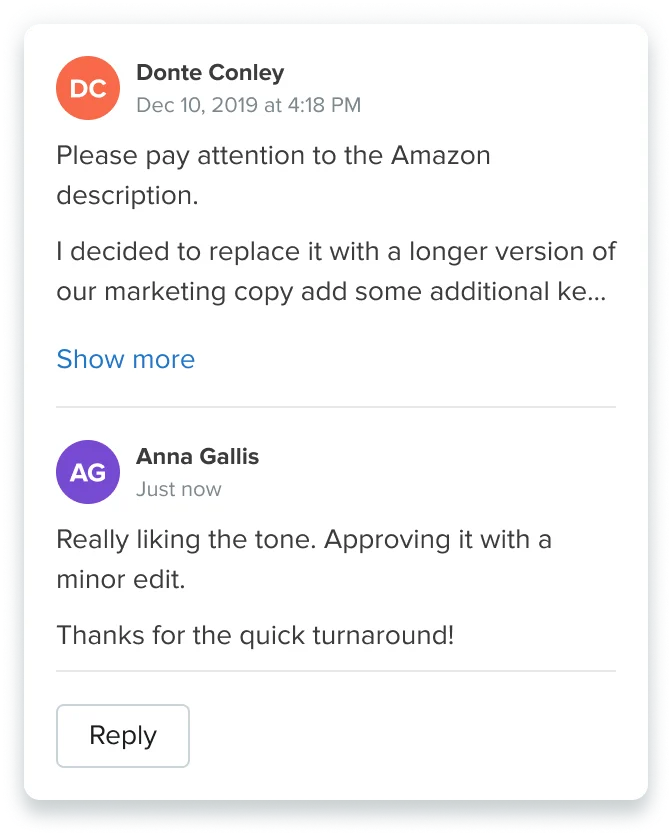
"I just need to comment on something, like in Google Docs."
That was the insight that shaped our direction. We didn't need to reinvent collaboration. We needed to latch onto a mental model people already understood.
Two Milestones, One Direction
We split delivery into two milestones, sequenced to ship value early while building toward the more technically complex problem.
Milestone 1: Making Collaboration Visible
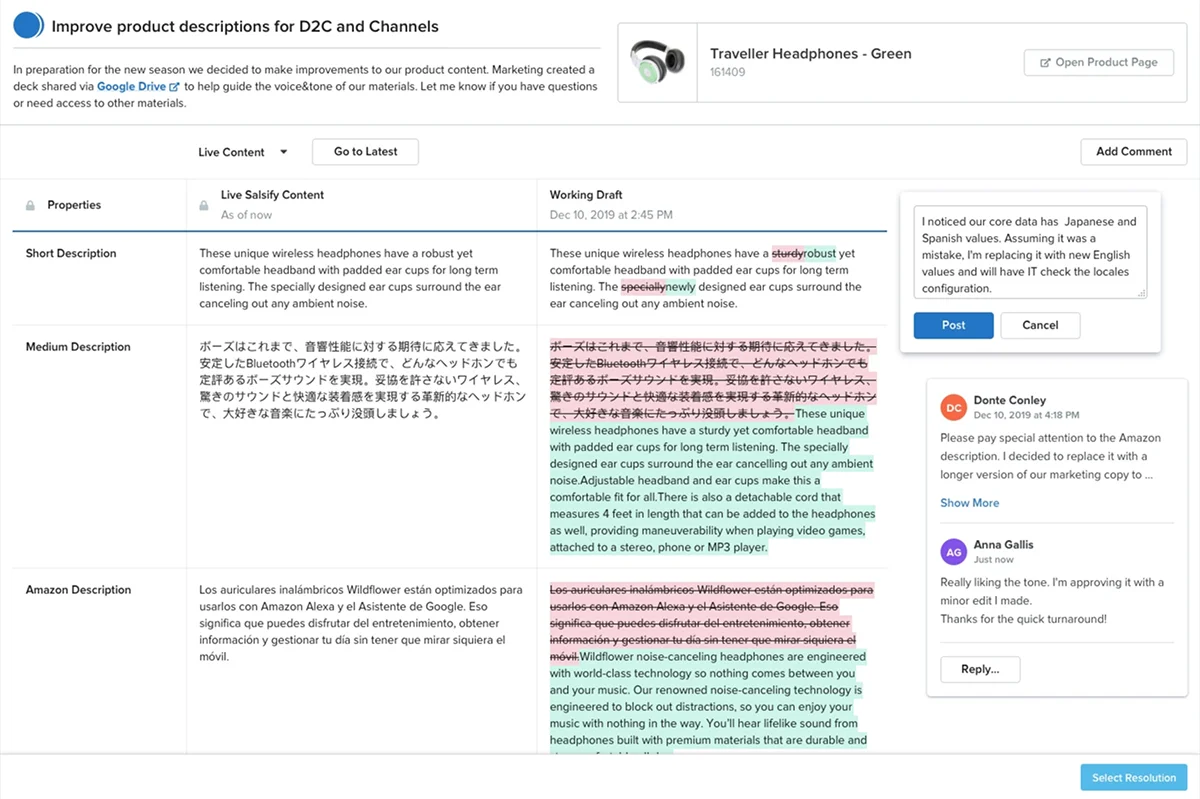
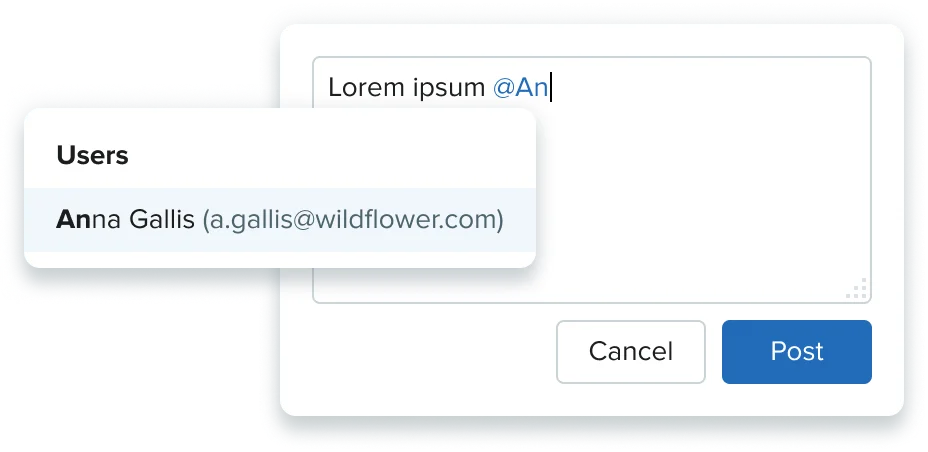
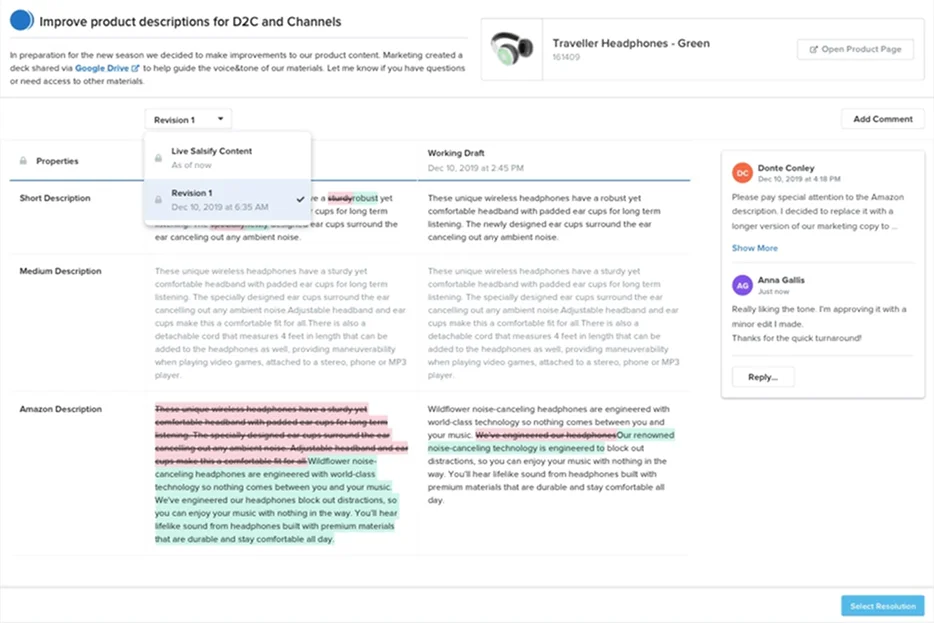
The first milestone introduced side-by-side content comparison and inline commenting, giving teams a way to communicate about changes directly inside the platform. With @mention support, content managers could pull in a specific colleague and keep the conversation in context rather than switching to email.
External partners could now be brought into the workflow without needing a full Salsify account. The spreadsheet handoffs that had been a fixture of every content cycle started to disappear.
Milestone 2: Solving Versioning
The second milestone tackled versioning — a technically complex problem driven by three real needs we heard repeatedly in research:
- Managing seasonal campaigns without overwriting evergreen content
- Creating backups when retailers modified product descriptions
- Rolling back when mistakes happened
Each need pointed to a different version state: draft, proposed, approved, and archived. Getting the state model right before designing the UI was the critical work here.
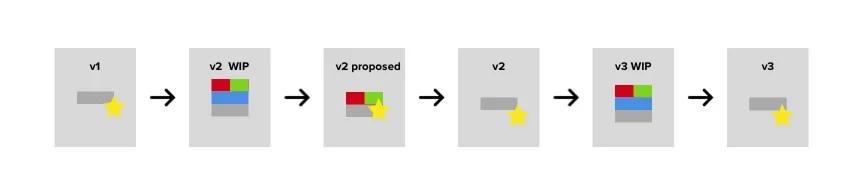
With the model defined, the UI became a version history dropdown that let users navigate between any saved revision and compare it against the current live content. Restoring a previous version became a two-click operation.
Collaboration That Compounded
One early adopter saw their time-to-market drop 60%, from 115 days to 45 days. That number came directly from a customer who had been managing content updates entirely through email before.
We hit 6% month-over-month growth with over 3,000 comments across workflow tasks by end of Q1 2020. Content managers started bringing freelancers directly into Salsify and retiring their spreadsheet workflows.
The "Google Docs" insight held up. When we gave people something that matched how they already thought about collaboration, adoption didn't require a behavior change — it just removed the friction that had been sending them to other tools.