The Gap Is Closing
I've been playing with tools my whole life, way before I knew what design was. As a kid I tried everything. Music software, Photoshop, Flash, whatever I could get my hands on (I pirated so much software). Not to get good at them. Just to see what came out. That's how I ended up in visual design, which pulled me toward HTML, then CSS, then the early web. I wasn't building toward anything in particular. I was just following what felt fun.
Visual design was where things clicked. I could make something and feel like it was actually mine. Along the way I picked up just enough HTML and CSS to get myself into trouble, which ended up mattering more than I expected.
The mountain I never climbed
When I got my first design job I had Adobe tools, Sketch, and that small bit of front-end knowledge. Enough to be a slightly better collaborator than most designers. I could look at a component and have a real opinion about how it should work, not just how it should look.
It also made the gap more obvious.
I had ideas that Figma could gesture at but never really express. At ChatID the engineering team was generous and cared about craft. At Sensive, Rolando, a designer turned engineer, built while I shaped. It always worked, one way or another. But it was always someone else's time making it possible.
The tools that almost got there
When the first AI tools showed up I tried all of them (so many one-month $20 subscriptions).
v0 and Lovable were impressive the way a magic trick is impressive. Something appeared on screen, looked like a thing, but the whole setup was aimed at people who just need something to exist. Cursor was more interesting, closer to actual code, but at the time it felt built for engineers who wanted a copilot. Not really for a designer who knew a little and wanted to do more with it. That's changing now, but it wasn't there yet.
I kept trying. Nothing really stuck.
The moment things changed
Late last year Claude Code changed things, and the reason isn't what I expected.
It wasn't just that the output got better. It was that I could think out loud, go back and forth in something that felt like real planning, and actually build from there. For the first time the distance between what I wanted and what existed felt small enough to cross on my own.
I've built three things with it now and each one taught me something different.
Scheduling tooling for Practice Round, my free design community for interview prep, was first. Looking back I can see every mistake, mostly from not knowing how React apps are actually structured. Wasted tokens everywhere. But I shipped something real, which was new for me.
Then a scraper I built out of pure curiosity. It finds class action settlements people might qualify for, pulls the details, extracts and formats everything so you can actually file. Not a product. But it taught me what it feels like to work on a pipeline and manipulate data through AI, not just throw data at it.
Then aqui.com.bo, a real estate platform for Bolivia. Aqui is the one I keep coming back to. Partly because of what I learned from the first two. Partly because of one detail I find myself telling people: I never opened Figma. The whole thing started in rough HTML, kept as bare as possible, and grew from there. It's gaining real traction now, which still catches me off guard.
What my process actually looks like now
AI hasn't replaced any part of how I design. If anything I go through every step more carefully now, because I actually can.
Research moves faster. I find myself using Claude to structure better surveys, sharpen research plans, work through interview data, write reports people can read without falling asleep. The thinking is still mine. The overhead is just lower.
Prototyping has completely changed, and good riddance honestly. I used to dread the hours a Figma prototype needed before it was ready to put in front of someone. Now I build something that works instead. It tests better, communicates more, and takes a fraction of the time.
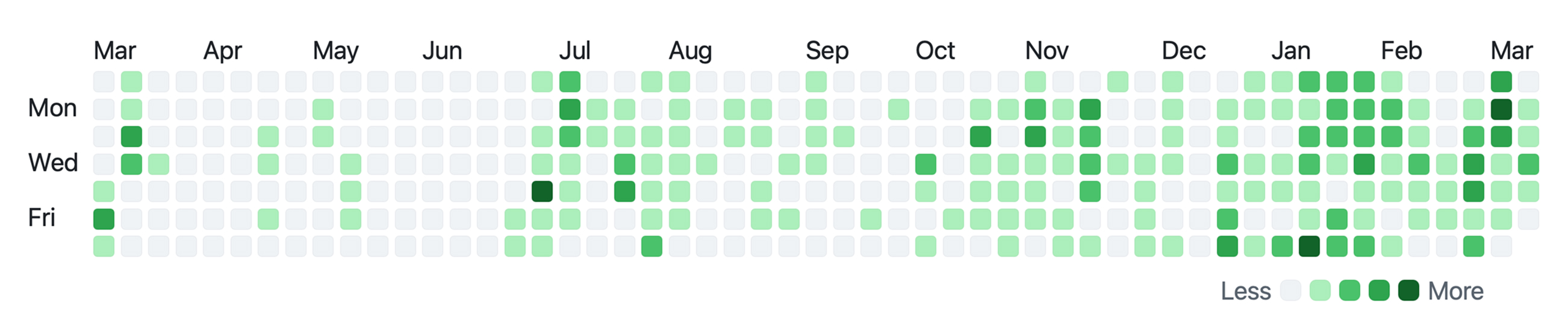
The thing I keep coming back to is what's happening in my day job. This week I celebrated one of my reports opening their first PR, and I've found myself pushing tweaks to our codebase more often than I expected. I can work directly alongside engineers instead of handing things off and waiting. And I keep thinking about all the micro-interactions and small details that never made it into a sprint because nobody had bandwidth for them. That's starting to change. The craft is getting attention it didn't used to get.
What I'd tell other designers
My favorite designers are not necessarily the most technically sophisticated. They're the curious ones. The ones willing to take a small leap and just try something, open a new tool and see what comes out, let their process look a little unfamiliar for a while.
I recognize that posture. It's the same thing I was doing as a kid, loading up software I didn't understand just to see what would happen.
The outputs from AI tools right now are genuinely mixed. Some of it is useful and some of it will send you in circles for an afternoon. But maybe that's the point. We're in one of those moments where a lot of tools are emerging at once and nobody really knows which ones will stick. The designers who figure out what comes next will be the ones willing to dig around, find what fits, drop what doesn't, and slowly build a process that is actually theirs.
Nobody handed me a path into design. I found it by playing around long enough to stumble onto something that clicked.
I don't think that part has changed.
PS: This post started as a voice memo. A messy, rambling dictation I talked through and shaped with Claude until it became something I wanted to share. Felt like the right way to write this one.